When the Tail Goes Tech: A Charter Client's Playbook for Irregular Operations
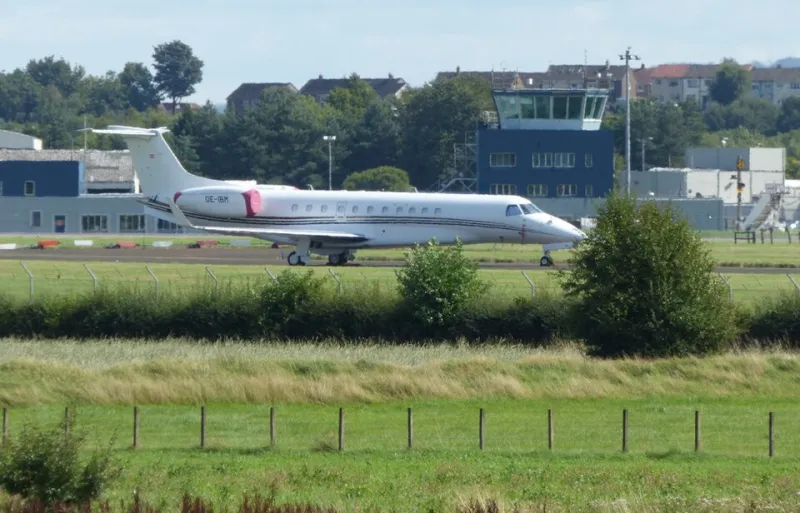
Photo: Thomas Nugent , CC BY-SA 2.0, via Wikimedia Commons
A private jet is not a guarantee against physics, weather, or a failed component. The cabin door may close on schedule ninety-nine times, but the hundredth trip is the one that defines the relationship. Irregular operations — the industry term for delays, diversions, mechanical cancellations, and last-minute substitutions — are rare in private aviation, but they are not imaginary. The affluent traveler's advantage is not immunity. It is the ability to ask better questions before the irregular day arrives.
The contract is the recovery plan
When a flight goes technical, the first useful document is not the app. It is the charter agreement. Read the cancellation, substitution, delay, and force majeure provisions before the trip. Does the operator owe a refund, a credit, or a replacement aircraft? Is a substitution allowed at the operator's discretion, and must it be of equal or greater capability? Who pays for repositioning, crew duty time, or overnight accommodations? The answers vary by operator and by membership tier. A salesperson's reassurance is not a term. The signed agreement is.
What the operator controls, and what it does not
Weather and air traffic control are outside the operator's control. Maintenance is not entirely. A Part 135 operator is expected to have a maintenance program, spare parts strategy, and crew scheduling that reduce the chance of a preventable cancellation. Ask how the operator handles an aircraft-on-ground event: does it have preferred maintenance partners at your destination, a spare aircraft in the region, or a formal recovery desk? The quality of the answer tells you more than the promise of on-time performance.
The substitution question
Substitution is the most emotional irregular operation because it changes the product. A midsize jet becomes a light jet; a familiar crew becomes an unfamiliar one; a nonstop becomes a fuel stop. The contract should define the acceptable substitute and the compensation if the substitute is inferior. Ask whether the operator can substitute a different tail from its own fleet, a partner's fleet, or the open market. Ask who bears the cost difference. If the answer is that the operator will make it right, ask for the clause that makes it right.
Membership tiers and the recovery ladder
Membership programs often market recovery as a benefit. The details matter. A high tier may promise priority access to the operator's own fleet, a dedicated account manager, or a guaranteed replacement within a set window. A lower tier may promise only a refund or a credit. Neither is automatically better; the traveler should know which lever is available before the flight. Ask for the recovery ladder in writing: first the operator's fleet, then partner aircraft, then a commercial alternative, then a refund. Ask how quickly each step is triggered and who communicates it.
Questions to ask before you need them
- Which entity operates the flight, and what is its certificate number?
- What does the agreement say about mechanical cancellation and substitution?
- Is the quoted aircraft the scheduled aircraft, and what notice is required for a change?
- What compensation applies if the substitute has less range, fewer seats, or no cabin attendant?
- Who is the after-hours contact, and what is the escalation path?
- Does trip cancellation insurance cover private aviation irregular operations?
- Are catering, ground transport, and hotel costs covered when a delay becomes an overnight?
The first hour after the call
When the call comes, ask for the reason in writing, the new estimated departure time, and the proposed recovery. Do not accept a verbal substitution without the tail number and operator certificate. If you are already at the FBO, ask the operator to coordinate with the ground team rather than leaving you to negotiate. Keep a contemporaneous record of times, names, and commitments. A calm client with documentation is harder to ignore than an angry one without it.
The verdict
Private aviation's promise is not that nothing will go wrong. It is that the relationship can absorb the wrong day. Choose an operator whose contract explains recovery before you need it, whose membership tier matches the risk you are taking, and whose communications remain specific under pressure. A canceled flight is inconvenient. A canceled trip is a choice made by an operator that was never prepared to recover.