Two People at the Yoke: The Questions That Reveal Who's Really Flying Your Charter
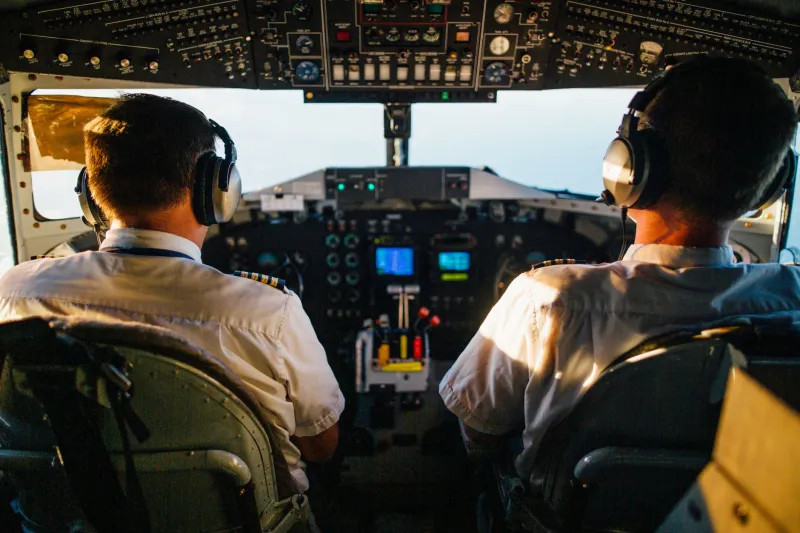
The photographs on a charter operator's website are always of the airplane. Low-slung wings against a sunset, cream leather, a fruit plate arranged with obvious care. What the brochures never show are the two people in the cockpit — and yet no variable in private aviation moves the needle on your safety, comfort, or on-time arrival quite like they do.
Experienced charter buyers understand this asymmetry. They know an operator can hold a flawless safety record and still crew a flight with a freshly rated captain on his first transcontinental run into a challenging airport. The aircraft is a machine. The crew is a judgment call. Here is how to make that judgment with the same rigor you'd apply to any other significant decision.
Time in Type Is the Whole Ballgame
The single most revealing question you can ask an operator is deceptively simple: How many hours does the pilot in command have in this specific aircraft?
Total flight time is nearly meaningless. A pilot with 12,000 hours spent entirely in turboprops is, for your purposes, a novice in a Gulfstream G450. What matters is PIC time in type — hours logged as captain in the exact airframe you're chartering. A reasonable benchmark for a light or midsize jet is 500 or more hours in type for the captain; for a heavy jet or an aircraft demanding specialized skills, more is better.
Operators with nothing to hide will answer this question within minutes, often with specifics. Operators who go quiet, or who pivot to talk about the company's overall experience, are telling you something. Evasion is data.
The Pairing Matters as Much as the Pilots
A superb captain paired with a 200-hour-in-type first officer is a meaningfully different operation than the same captain flying with a seasoned colleague. Crew pairing — the deliberate matching of experience levels across the cockpit — is one of the quiet arts of first-rate charter management.
Ask how the operator builds crew pairings on your itinerary. Do they deliberately balance a newer first officer with a high-time captain? Do they keep proven teams together on demanding trips, such as mountain approaches into Aspen or Eagle County, or night operations into short runways? The best operators think about the cockpit the way a championship golf venue thinks about its greens: the details are invisible until they're not.
Training Currency: The Question Almost Nobody Asks
Every US charter operator under Federal Aviation Regulation Part 135 must conduct recurrent training. But the regulatory floor is exactly that — a floor. Elite operators exceed it, sending crews to simulator-based programs at facilities like FlightSafety International or CAE multiple times per year, with scenario-based training that goes well beyond maneuver drills.
Ask three things: Where is training conducted? How often, beyond the regulatory minimum? And does the program include line-oriented simulation — full-mission scenarios that replicate real trips, weather, and emergencies rather than checkbox maneuvers? An operator who can name the training center, the program, and the last recurrent dates for your specific crew is an operator invested in the answer.
Fatigue: The Invisible Passenger
Fatigue has contributed to more accidents in business aviation than mechanical failure, and it is the factor no safety rating fully captures. A crew that flew a red-eye to the West Coast yesterday and is scheduled for your 6 AM departure to Teterboro today is, functionally, a compromised crew — however legal the assignment may be.
Sophisticated operators maintain fatigue risk management programs that go beyond FAA duty-time minimums. Ask how they handle it. Do schedulers build in buffer time? Will they voluntarily add a crew member or delay a departure rather than push a tired pair into the cockpit? The answer to that last question is a culture test. Operators who say "we'd adjust the schedule" have a safety culture. Operators who say "the regulations allow it" have a compliance culture, and the difference matters.
A Practical Checklist
Before signing any charter agreement, put these five questions to your operator — ideally in writing:
- PIC hours in type for the captain assigned to your flight, and total time in type for the first officer.
- Crew pairing philosophy — how experience is balanced across the cockpit on trips like yours.
- Training program details — facility, frequency, and whether it includes scenario-based simulation.
- Fatigue management practices — what happens when a crew approaches duty limits on your itinerary.
- Crew continuity — whether you can request the same team on repeat trips, a hallmark of operators confident in their people.
Legitimate operators welcome these questions. In our experience, the quality and speed of the response tells you more about the operation than any certificate on the wall.
The Aircraft Is the Amenity
There is a useful reframe for anyone new to private flying: the jet is the amenity; the crew is the product. Cabins can be swapped, catering upgraded, schedules adjusted. The two people up front cannot be replaced mid-flight.
The affluent traveler applies due diligence to wealth managers, surgeons, and attorneys. Extend the same discipline to the cockpit. Ask the questions, note the answers, and pay particular attention to the silences. In private aviation, the operators worth flying with are never the ones who resent being asked — they're the ones who have been waiting for someone to ask.