Nobody Needs to Know You Left: Inside the Privacy Architecture of Modern Charter Flying
For a certain class of American traveler, the aircraft was never the point. The Cessna Citation Longitude and the Gulfstream G280 differ in range and cabin volume, but to the executive weighing a charter quote, the more meaningful distinction often lies in what each flight leaves behind: a record, a sighting, a story told by someone standing too close to the gate.
Discretion, long treated as a byproduct of private aviation, has become its own product. And like any product, it has specifications.
The Tail Number Is a Fingerprint
Every US-registered aircraft carries an N-number, and to the trained observer, that registration is a complete itinerary waiting to be read. Flight-tracking platforms aggregate public ADS-B data and, for a modest fee, will tie a tail number to its owner, its hangar, and its movements — past and future.
Serious operators counter this with tail number blocking, a program administered through the FAA's Limiting Aircraft Data Displayed (LADD) system. Enrolled aircraft are excluded from the public data feeds that power consumer tracking sites. It is not absolute — some aggregation services obtain data through other channels — but it removes the casual, searchable record that turns a routine trip to Dallas into a public event.
Before signing a charter agreement, clients should ask one direct question: is this aircraft enrolled in LADD, and if not, why? Some operators resist because blocked aircraft are harder to market on the empty-leg market. That is a legitimate business reason — but it is the operator's reason, not yours.
The People Around the Flight
An untrackable aircraft accomplishes little if the transaction around it broadcasts. Privacy-conscious charter firms have built layered protocols that most travelers never see:
- Confidentiality agreements with crew. Flight departments and premium operators increasingly bind pilots and cabin attendants to NDAs that cover not just client identities but routes, guests, and conversations overheard at altitude.
- Broker discretion clauses. Reputable brokers will not confirm client names to the operator unless necessary, referring to parties by trip code rather than by name.
- Controlled FBO access. Fixed-base operators serving high-profile traffic — Teterboro, Van Nuys, Palm Beach International — offer private lounges, car-to-plane transfers, and ramp protocols that keep passengers out of sightlines from public roads.
- Payment and record hygiene. For families managing security, billing through an LLC or trust rather than a personal card removes another thread from the public ledger.
None of this is theatrical. It reflects a genuine shift in what clients are buying. Surveys across the wealth-management industry consistently find that security and privacy rank alongside schedule control as primary motivations for flying private — ahead of luxury, and well ahead of prestige.
What Families Should Verify Before Booking
Discretion is not uniform across the charter market. A traveler whose movements warrant protection should treat the booking call as a diligence exercise:
- Ask about data. Is the tail number blocked? How long are trip records retained, and who can access them?
- Ask about people. Are crew and ground staff under confidentiality obligations? How are subcontracted operators vetted?
- Ask about the terminal. Which FBO will be used, and what private access arrangements exist at each end of the trip?
- Ask about the paper trail. Can the charter be contracted through an entity rather than an individual? Will passenger manifests be minimized?
A quality operator will answer these questions without hesitation. Hesitation, in this context, is itself an answer.
The Quiet Standard
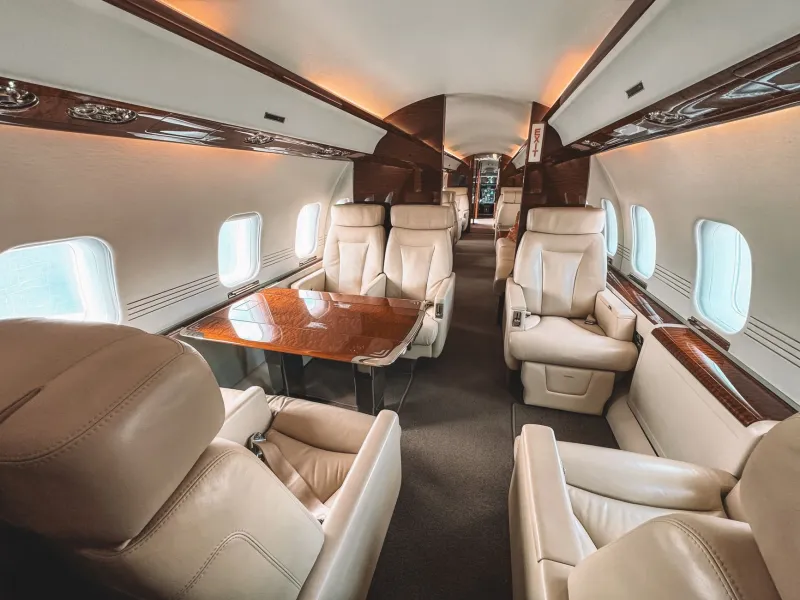
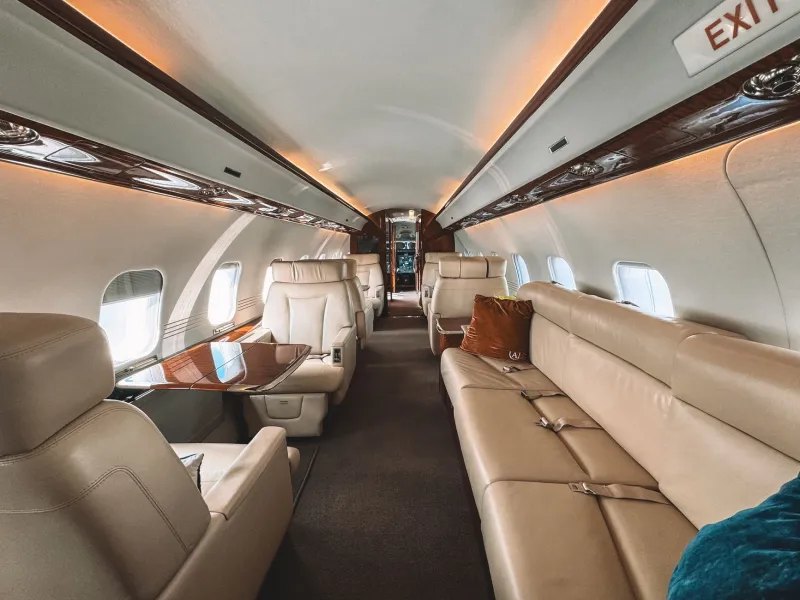
There is an irony in the fact that the most exclusive feature of private aviation is one that no one can see. The leather seats and the onboard espresso machine photograph well; the LADD enrollment and the signed NDA do not. Yet for the executives, entertainers, and families who charter most frequently, the invisible infrastructure is the product.
The aircraft gets you there. The architecture of privacy ensures that, as far as the world is concerned, you never left.