The Cabin Belongs to Whoever Signed the Contract: A Field Guide to Charter Guest Etiquette
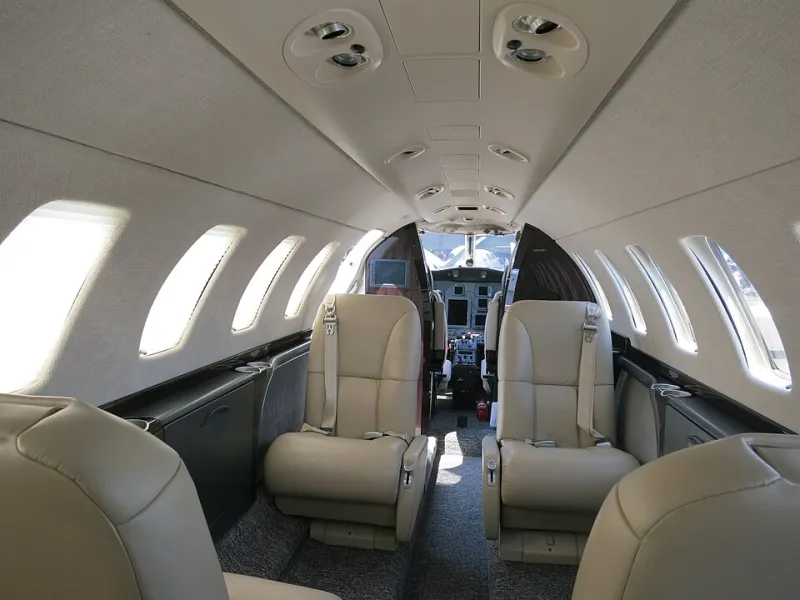
Photo: JetRequest.com, CC BY-SA 3.0, via Wikimedia Commons
There is a moment on every shared charter flight when the hierarchy becomes clear, and it almost never happens out loud. It happens when the client reaches for the espresso machine before the host does. When the in-law rearranges the seating. When the business partner's teenager asks for the wifi password before the cabin door has finished closing. Nobody announces anything. Everybody simply understands.
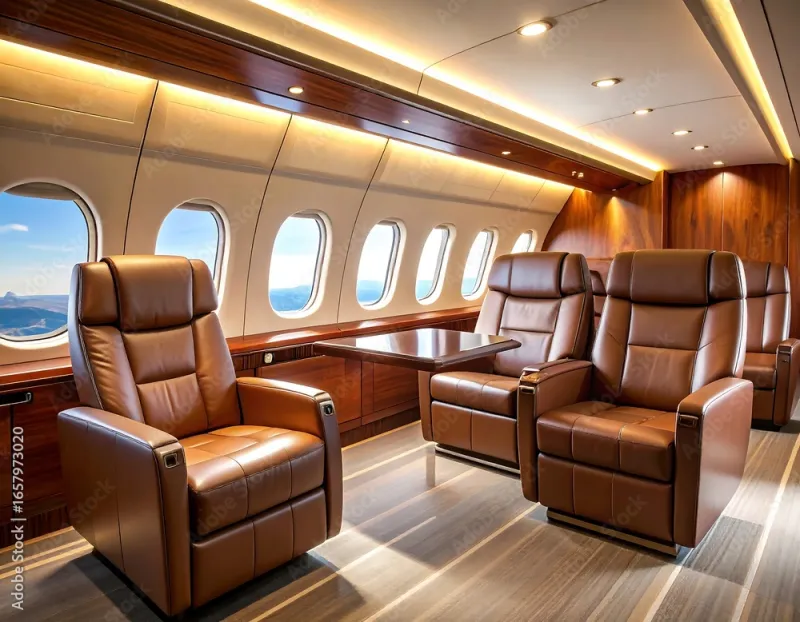
Charter aviation strips away the usual social buffers. There is no first-class curtain, no gate agent to blame, no anonymous crowd to disappear into. A cabin at 41,000 feet is a sealed room with your name on the contract, and that contract quietly assigns every role inside it.
The Passenger Who Outlives the Trip
The most common scenario we hear about, usually secondhand through charter operators, is the business guest who treats a courtesy flight as the beginning of a relationship rather than the end of one. A partner invited aboard for a trip to Aspen accepts. The flight is seamless. Then come the follow-up calls routed through the assistant, the casual mentions of the next convention, the assumption that the seat reopens whenever convenient.
The fix is unglamorous: clarity before the invitation. A host who says, plainly, that this is a one-time arrangement for this itinerary has spent nothing but a sentence and saved a season of diplomacy. Operators we work with note that the smoothest flights are almost always the ones where expectations were transmitted before anyone reached the ramp.
Relatives, and the Limits of Hospitality
Family complicates the arithmetic. An in-law invited for a wedding weekend in Napa may assume the cabin comes with the family — future holidays, future legs, future plus-ones. Here the host's leverage is structural rather than verbal. Charters are booked per trip, per aircraft, per itinerary. The document itself says what the relationship says cannot.
A practical habit: when family boards, hand the crew the tone. A discreet word to the flight attendant about which guests need attention and which need space does more than any family meeting. Crews are trained for exactly this choreography; let them perform it.
The Wifi Password Is a Metaphor
Then there is the younger passenger who requests connectivity before the seatbelt sign is hypothetical. It seems trivial. It is not. The guest who treats the aircraft as an amenity — rather than a host's private domain — is signaling that they have not registered whose hospitality they are inside.
Hosts need not correct this directly. The graceful move is environmental: the host mentions the schedule, the timing of the return leg, the plan after landing. Guests recalibrate quickly when the itinerary is described aloud. The cabin reorganizes itself around the person who owns the plan.
Setting Expectations Before Wheels-Up
A few disciplines that consistently work:
- State the scope at invitation. "We'd love to have you for the Chicago leg" does more work than a paragraph of warmth.
- Let the assistant handle logistics. Routing details through staff preserves the relationship and clarifies roles simultaneously.
- Brief the crew privately. They will manage seating, service order, and small frictions without anyone losing face.
- Never negotiate in the cabin. Any conversation about future flights, shared costs, or additional guests belongs on the ground, after the trip.
The Quiet Rule
None of this requires coldness. The best hosts we observe are generous to a degree that feels effortless precisely because the boundaries were drawn early and invisibly. Guests relax when the structure is clear; anxiety lives in ambiguity, not in hierarchy.
The cabin belongs to whoever signed the contract. Everything else — the seating, the conversation, the espresso — follows from that fact, and the sooner it is understood by everyone aboard, the better the flight is for all of them.