Twenty Minutes on the Ramp: Why the Fixed-Base Operator You Never Chose Decides How Your Charter Feels
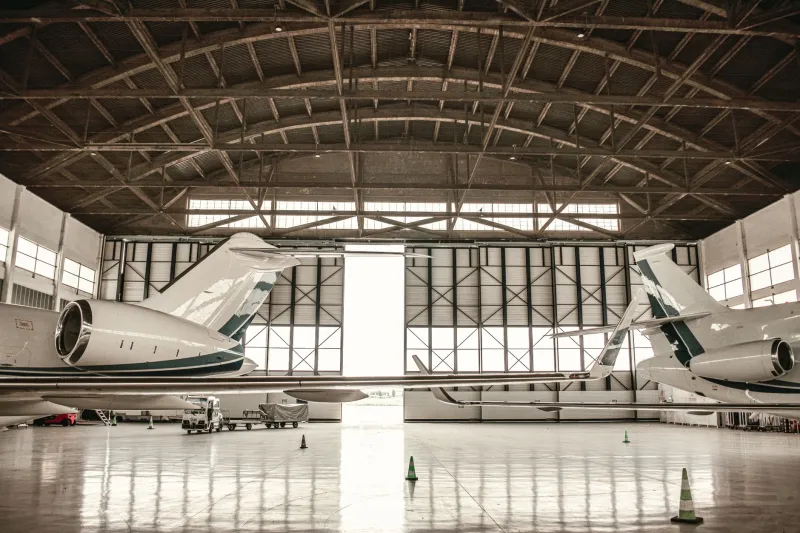
When travelers evaluate a charter, the questions tend to cluster around the airplane: what model, how old, what cabin configuration. Reasonable questions all. But between the moment your car pulls through the security gate and the moment the wheels lift, you will spend more of your trip inside a fixed-base operator's terminal than anywhere else. The FBO — the private terminal and ground-handling company that serves general aviation — is the invisible variable in nearly every charter itinerary, and it is the one travelers almost never choose.
That is a mistake worth correcting.
What an FBO Actually Does
A fixed-base operator is, in plain terms, the private-aviation equivalent of a terminal, gate agent, fuel farm, and concierge desk rolled into one facility. When your charter lands in Aspen, West Palm Beach, or Teterboro, an FBO line service crew meets the aircraft, handles bags, marshals the plane to parking, and coordinates fuel, de-icing, and ground transportation. The charter operator flies the jet; the FBO stages everything around it.
Because most markets host two or more competing FBOs — sometimes side by side on the same ramp — the quality of your ground experience can vary dramatically within a single airport. One facility may have a staffed concierge who pre-stages your luggage and has your car idling at the wing; another may offer a clean but impersonal waiting room and a three-bag wait for a crew car. The difference is rarely visible on a booking screen. It shows up only in person.
The Anatomy of an Exceptional Ramp Stop
The best FBOs share a handful of traits, and each one is observable in under an hour.
Rampside luggage handling done properly. At a top-tier facility, your bags travel from your car trunk to the aircraft hold without ever passing through your hands — and without being stacked on an open cart in view of the ramp. Discreet handling is a service standard, not a flourish.
A lounge that respects privacy. The distinction between a good VIP lounge and a mediocre one is less about espresso machines and more about sightlines. Can you take a call without an audience? Is there a private suite available on request? The finest facilities — think the flagship operations at Teterboro or Van Nuys — treat the lounge as an extension of the cabin, not a waiting room.
Priority sequencing. De-icing, fuel, and tug availability are all queue-based. FBOs with strong relationships and adequate staffing move their transient charter traffic to the front of those queues. In January in Denver or Chicago, that can mean the difference between a twenty-minute stop and a ninety-minute delay.
Customs on demand. At U.S. airports of entry, the best FBOs coordinate with CBP to have customs officers available when your international flight lands, rather than making your crew file for a scheduled inspection window that may not match your actual arrival.
The human layer. Line service professionals who remember your tail number, your coffee order, your dog's name. This is the least quantifiable asset and often the most valuable.
The Traveler's FBO Checklist
The good news: you do not need to manage any of this yourself. Your charter operator or broker will happily specify the handling FBO — if you ask. Before your next booking, consider requesting:
- The named FBO for both departure and arrival, and whether alternatives exist at that airport.
- Rampside loading for luggage and, where permitted, vehicle-to-aircraft boarding.
- A private lounge or suite during any ground delay or early arrival.
- De-icing priority during winter months, with the operator confirming the FBO's staffing for your departure window.
- Pre-arranged ground transportation staged at the aircraft, not at the terminal door.
- CBP coordination for any international leg, confirmed in writing before departure.
None of these requests is unusual. Operators make them constantly on behalf of their most attentive clients.
Why It Matters More Than It Seems
Charter flying sells reclaimed time, and the FBO is where that time is either protected or quietly surrendered. A well-run facility compresses the ground experience into something approaching a single fluid motion — car door to cabin door in under ten minutes, luggage stowed before you've taken your seat. A poorly run one leaks minutes at every seam: bags waiting in the rain, a fuel truck that arrived before the tug, a lounge with no quiet corner.
The aircraft will always be the headline. But seasoned travelers learn to read the supporting cast, and no supporting actor matters more than the people on the ramp. Ask the question at booking. It costs nothing, and it may be the difference between a trip that merely worked and one that felt effortless.